Showing posts with label Associated Press book review. Show all posts

Wednesday, April 13, 2011

Obama's sister to publish children's book that channels her mom

This book by President Barack Obama's younger sister looks adorable.

Below is the well-written Associated Press feature on Maya Soetoro-Ng's illustrated book, "Ladder to the Moon."

Sad that she had to defend her brother's citizenship in this interview.

President's sister puts their mom in picture book

By LEANNE ITALIE
Associated Press

NEW YORK — Above a rooftop in Jakarta or the Indus River in Pakistan, the moon looms large in the childhood memories of Maya Soetoro-Ng, but President Obama's little sister hadn't realized how important those memories were until she was pregnant with her oldest daughter.

It was then she thought about how their mother, Ann Dunham, would jostle her awake wherever they were — in India or New York, England or Hawaii — to head outside so they could appreciate the moon. And how grandmother and granddaughter would never meet.

Suhaila, now 6, was born a decade after Dunham died of cancer, but Soetoro-Ng has paired her and "Grandma Annie" through the moon in a picture book out this month.

The dreamily drawn book from Candlewick Press, "Ladder to the Moon," opens with little Suhaila asking her mother what her grandmother was like. "She was like the moon," her mother replies. "Full, soft and curious."

In a telephone interview from her home in Hawaii, Soetoro-Ng told The Associated Press that she thought of her mother "a lot during my pregnancy, having come across boxes full of my children's books and toys that she had saved for me. That moment was a great shuddering moment of love and longing. I really did want to somehow connect the two of them."

She and husband Konrad Ng chose the name Suhaila because it means "glow around the moon" in Sanskrit.

The book describes how one night, a golden ladder appears at the girl's open bedroom window with her grandmother, hair flowing down her back and silver bangles tinkling on her arms. The two climb to the moon, looking down on a world filled with sorrow, from earthquakes and tsunamis, poverty and intolerance.

They invite children and others who are suffering to take refuge on their gray, glowing moon, until it's time for the girl to say goodbye and climb back into bed, knowing they've helped others heal.

Like Soetoro-Ng (pictured at right), who said she wrote the book to encourage unity, compassion and peace, Suhaila hopes the book will have an impact on the world.

"I hope my friends read my moms book," the first-grader said in an email, clearly composed on her own, 6-year-old grammar and all. "And my cousins read my moms book. and my teachers read my moms book. And when my sister is old enough to read I hope she reads it. I hope that when they read it they think about peace and no more fiting in the world and I hope that many peopol like it."

(Suhaila is pictured below with her mom)

She continued: "I think its awesome that my name is in the book becuaes I love books and maybe someone like me will read the book and feel like I am there friend."

Friendship was something that came easily to Dunham, explained Soetoro-Ng. Her mother lived in 13 different places around the world, first alone and later with her daughter and son in tow, but felt at home, "more or less," in each, Soetoro-Ng said.

And how did this affect Soetoro-Ng's famous brother? "That ability to break down perceived boundaries or cross bridges is something that he got from her," she said.

On Tuesday, during a New York City swing to promote the book, Soetoro-Ng deftly handled years-old questions about her brother's citizenship, an issue Donald Trump has been trying to revive in recent weeks as he mulls a run for president himself.

"The facts are simply that my brother was born in the United States at the Kapiolani Hospital for Women and Children in 1961. His birth certificate has been authenticated by a number of sources," she said. "Really I feel that it behooves us to think about moving forward, and up, and really focusing on positive possibilities and solutions, and the facts are that my brother is a U.S. citizen."

Dunham, divorced from Obama's father and years later from Soetoro-Ng's, died in 1995 at age 53 of ovarian and uterine cancer before the births of her four grandchildren — Suhaila, her 2-year-old sister Savita and their famous cousins, Malia and Sasha Obama.

A natural storyteller, Dunham passed on many of her best to her kids while under the glow of the moon.

"The moon sort of guided us to points of intersection," Soetoro-Ng said. "She loved the moon so much because the moon was the same for everybody and all of these people and places were connected because we shared the same moon." The book takes its title from Georgia O'Keeffe's 1958 painting of a floating ladder on an aqua background.

Born in Jakarta, Soetoro-Ng attended Barnard College and the University of Hawaii before earning her master's in secondary education from New York University. She spent several years teaching and developing curricula for public middle schools in Manhattan, then returned to Hawaii and received a Ph.D in international comparative education.

She now lives with her family in Honolulu, working as a cultural educator for the nonprofit East-West Center and lecturing in the education department at the University of Hawaii.

So when did she find the time to write a children's book? In Chicago, at her brother's kitchen table while helping to get him elected president. Soetoro-Ng had always wanted to write a book for young kids. At the time, Obama had just signed a contract for "Of Thee I Sing: A Letter to My Daughters," his picture book released last November.

"I felt suddenly brave, taking the risk of trying to get published," she said.

Soetoro-Ng, nine years younger than the president, has always celebrated her multicultural heritage as the daughter of a white American and an Indonesian dad, but Dunham has brown skin in the book — and deliberately so.

Soetoro-Ng showed her illustrator, Yuyi Morales, photos of Dunham and Suhaila before Morales went to work and "asked her to not be true to those pictures." Morales drew partly on her own Mexican heritage in creating the drawings.

"I wanted her to try and capture their spirit, but I told her I wanted them to be ethnically ambiguous," she said. "I wanted them to be every woman and every child. I wanted a European child, an African child, an Asian child to be able to feel a certain familiarity in their visage."

Soetoro-Ng isn't finished yet as an author. Candlewick also plans to publish her young adult novel about a 16-year-old healer. No release date has been scheduled.

Saturday, April 2, 2011

Money myths debunked in these books

The Associated press published a series of stories about financial myths this week. True to form, they followed that theme with their weekly business book review, "Bookshelf," as well.

Below are the AP's mini-reviews of six new books that examine some money myths. They may just inspire you to look at your finances in a different way. Thanks AP.

Bookshelf: Cutting through money misinformation
The Associated Press

TITLE: Debunkery: Learn It, Do It, and Profit From It — Seeing Through Wall Street's Money-Killing Myths

AUTHOR: Ken Fisher

PRICE: $27.95

E-BOOK: Available for iPad, Kindle, Nook, Sony Reader

SUMMARY: "Debunkery" is the seventh book by Ken Fisher, the founder and CEO of Fisher Investments, a money management firm overseeing more than $32 billion. In his latest work, Fisher attacks common myths and misperceptions, and shows readers how to analyze and discredit them. He divides the discussion into five sections: Basic Bunk to Make You Broke; Wall Street "Wisdom"; "Everyone Knows"; History Lessons; and It's a Great Big World! Each of the 50 chapters is dedicated to one misperception and is typically only three to five pages long. The short discussions enable you to pick and choose what's most interesting for your financial situation.

QUOTE: "Once you intuitively accept that 1) lots of commonly accepted investing wisdom isn't wise, and 2) you will still make mistakes anyway but can aim to lower your error rate and improve your results, actually doing debunkery can be easy. Simple really!"

PUBLISHER: John Wiley & Sons Inc.

— David Pitt


TITLE: The Wall Street Journal Guide to the New Rules of Personal Finance

AUTHOR: Dave Kansas

PRICE: $16.99 (paperback)

E-BOOK: Available for iPad, Kindle, Nook, Sony Reader

SUMMARY: It makes sense that we should be acting differently about our money in the wake of the financial crisis. Some time-tested lessons of personal finance still hold true: saving, budgeting and avoiding over-borrowing and overspending. But Kansas makes a persuasive case that we need a new way of thinking to replace others that failed us, such as overreliance on the stock market and real estate.

One new rule is to really embrace thrift and abhor loading up on debt. As this veteran personal finance writer puts it, debt is deadly and credit cards are cursed objects. Another is that diversification really matters, not just in stocks but in retirement planning — IRAs, insurance plans and savings accounts in addition to 401(k)s.

When it comes to investing, be where the action is going to be: international markets and commodities such as oil, gold, wood and other natural resources. Other chapters focus on debt reduction, spending smarter on your home and other important topics.

If the lessons aren't all brand new, the focus and priorities are. In plain language, Kansas offers wise advice that points out a clear path to a stable financial future for those who follow it.

QUOTE: "The New Rules aren't simply quick fixes to financial problems. Instead they're about learning how to save, invest, and plan better, and they require discipline, prudence, and taking personal responsibility for your financial future. They're also about understanding that financial strategy is about more than money."

PUBLISHER: HarperCollins.

— Dave Carpenter


TITLE: Spousonomics: Using Economics to Master Love, Marriage, and Dirty Dishes

AUTHORS: Paula Szuchman, Jenny Anderson.

PRICE: $26

E-BOOK: Available for iPad, Kindle, Nook, Sony Reader.

SUMMARY: Forget the flowers and romantic getaways. If you want a happy marriage, think like an economist.

That's the premise of this new release by Wall Street Journal editor Paula Szuchman and New York Times reporter Jenny Anderson.

The authors have fun with their theory by taking 10 economic principles and explaining how they can be used to avoid the common pitfalls of marriage.

In the opening chapter, for example, the authors invoke Adam Smith's "The Wealth of Nations" in arguing for a division of labor based on skill sets, rather than automatically splitting chores 50-50. Another chapter titled "Moral Hazard, Or the Too-Big-to-Fail Marriage" discusses how the emotional safety of marriage can lead spouses to take each other for granted and wear away at a relationship.

And in "Trade-Offs, Or the Art of Getting Over It," Szuchman and Anderson encourage examining spats through a cost-benefit analysis rather than letting minor grievances fester.

On their own, marriage and economic theory aren't exactly fertile ground for lighthearted reading. But by bringing them together, "Spousonomics" injects some levity into both.

QUOTE: "At its core, economics is way simpler than all that. It's the study of how people, companies and societies allocate scarce resources. Which happens to be the same puzzle you and your spouse are perpetually trying to solve: how to spend your limited time, energy, money and libido in ways that keep you smiling and your marriage thriving."

PUBLISHER: Random House

—Candice Choi


TITLE: Give Smart: Philanthropy That Gets Results

AUTHORS: Thomas J. Tierney and Joel L. Fleishman

PRICE: $23.99

E-BOOK: Available for iPad, Kindle, Nook, Sony Reader

SUMMARY: What's so difficult about giving away money? After all, it's earning the money that's challenging. Well "Give Smart" aims to dispel the notion that successful philanthropy is as easy as writing a check.

While recognizing that there isn't one model that fits everyone's needs, the authors encourage philanthropists to develop a strategy that fits with their values and circumstances. Much of this can be achieved by focusing on a set of six essential questions, including "What is 'success' and how can it be achieved?' as well as "What am I accountable for?"

For example, it can be difficult to pin down the results of certain philanthropic gifts, such as those supporting social and environmental changes. So it's important to have a clear vision of your goals so you can determine if progress is being made, or if you need to adjust your strategy.

Whatever your means, "Give Smart" provides an interesting discussion to help you evaluate your own charitable contributions. Readers don't have to go through the rigorous analysis outlined here, but "Give Smart" can help you think about how you're measuring the success of your own donations and whether you might be able to put your time and money to work more effectively.

QUOTE: "All too often, philanthropists who are demonstrably lost give themselves an 'A' for their efforts, declare victory, and move on to new challenges. The only people who spot the underlying failures are those who needed the help, and didn't get it."

PUBLISHER: PublicAffairs

— Trevor Delaney


TITLE: The 10 Commandments of Money: Survive and Thrive in the New Economy

AUTHOR: Liz Weston

PRICE: $25.95

E-BOOK: Available for iPad, Kindle, Nook, Sony Reader

SUMMARY: Personal finance columnist Liz Weston starts by acknowledging that the traditional way to prepare a budget doesn't work for everyone, and prescribes a new approach that skips tracking every penny spent in a little notebook. She advocates keeping "must-have" expenses limited to 50 percent of income. That would include items such as housing, utilities, food, child care, minimum debt payments and possibly a car. Limiting overhead, she explains, provides flexibility, helps make it clear what's affordable and what's not, and makes it possible to afford some of life's pleasures.

Flexibility is a recurring theme as she helps readers adjust their planning to suit the current economy. Each of the 10 chapters offers a commandment for a different aspect of personal finance. The focus is on how the rules have changed and the steps needed to create a financially secure future.

QUOTE: "It's not up to me to tell you how to live your life or spend your money. It's up to you to do some soul-searching — and research — and then make some decisions about your spending, even if it means accepting some pretty big changes in your life."

PUBLISHER: Hudson Street Press

— Eileen AJ Connelly


TITLE: Don't Buy the Bull: Dispelling Disastrous Investment Advice and Money Myths in Our New Economy

AUTHOR: Cassandra Toroian

PRICE: $22.95

E-BOOK: Not available

SUMMARY: Cassandra Toroian, chief investment officer with the money management firm Bell Rock Capital, seeks to debunk 23 financial and investing myths that she says have become pervasive. Toroian faults other personal finance experts for perpetuating outdated advice. For example, she argues that buy-and-hold investing for the long-term doesn't work in an era when many blue chip names like Lehman Brothers and General Motors can collapse or end up in bankruptcy court.

She also challenges the notion that dividend-paying stocks are almost always a good long-term choice. And, contrary to popular belief, notes that not all debt is bad. The book is written in a conversational style. So even if you don't accept her provocative arguments, you can zip through the 128 pages and decide for yourself without investing too much time.

QUOTE: "The next time a personal finance guru gives you a definitive 'do' or 'don't' regarding some sort of financial decision, keep in the back of your mind the phrase, 'Don't buy the bull!' We're still in for a wild ride for many years."

PUBLISHER: Sterling & Ross

— Mark Jewell

Monday, January 17, 2011

AP Book Review: The Price of Everything

If you agree with the saying that everything has its price, then Eduardo Porter's book, "The Price of Everything: Solving the Mystery of Why We Pay What We do" may be the book for you.

An Associated Press press writer penned this review. I just thought it was worth sharing.

An engaging exploration of why we pay what we do

By LAURA IMPELLIZZERI
AP Business Writer

"The Price of Everything: Solving the Mystery of Why We Pay What We Do" (Portfolio/Penguin Group, $27.95), by Eduardo Porter: New York Times editorial writer and longtime journalist Eduardo Porter offers an engaging rumination proving the adage that everything has its price. And he means everything: work, women, even faith and the future.

Porter explores the factors we weigh, consciously and unconsciously, in making decisions about things we don't traditionally think of as having prices. And he shows that in every imaginable context our choices are influenced by circumstances and our available alternatives — more than by finance and logic.

Such thinking helps explain numerous apparent paradoxes that Porter highlights, including the fact that people seem more willing to give blood for free than if they are paid $25, and more willing to travel across town to save $20 on a $100 sweater than $20 on a $1,000 computer.

Time is worth more or less money depending on who is spending it, just as one person's trash is another person's treasure. So there's a whole lot more than supply and demand going on.

That is, people are obligated, whether by physical circumstances or community and family roles or other situational factors, to consider where they are, their personal history, social norms and fairness in making any economic choice. Institutions and governments likewise: Porter even casts the Protestant Reformation in terms of prices and benefits. After centuries of charging wealthy people ever-increasing fees for indulgences and pardons, the Catholic Church finally hit a ceiling when reformers opened alternative churches that provided more core services to more of the faithful, nearly for free.

He offers an equally price-driven prediction for future modern churches. In historic contrast in other industrialized nations, the ranks of the faithful are likely to keep growing in the U.S. because of the wide supply of customer-oriented services American churches and other religious institutions provide. The U.S. has a large supply of religion, offered at relatively low prices.

While an elegant and enjoyable read, "The Price of Everything" is also timely: Porter makes a strong case in the wake of the recession that it's silly for economists and policy makers to assume people act according to rational assessments or even in their own best interest. Not only could nothing be further from the truth, he says, that's as it should be, and economists can no longer ignore this reality in their modeling and theories — or policy advice.

This complexity means Porter actually can't explain why we pay what we do, as his title promises. Of course not. It's just too bad he doesn't lay out more clearly the new, more holistic ways we could think about the global economy, and he doesn't suggest more constructive frameworks for future economic thought.

Wednesday, September 29, 2010

The college decision: Some books that might help

I chose my college - or shall I say my first college - using a method I thought was perfect: Which school had a ski team I might have a shot at making. I had good grades and test scores to bring to the table, but this qualifier, which seemed all-important at the time, trumped all for my 17-year-old bad self.

After touring a bunch of New England Schools (Bowdoin, Syracuse, UVM, Colby, St. Lawrence, UNH) with my mom in the family station wagon, I ended up at the University of Colorado at Boulder. I admit, it was purely an emotional decision. I fell in love with the Rockies and the Flatirons, and that was that, even in the wake of a racing "career"-ending ACL/MCL/meniscus tear at the formidable Arapahoe Basin.

But, more than (ahem) 20 years later, I concede that there are far, far better (and financially sound) criteria for high schoolers and their folks to take into account when choosing a college. Below is an Associated Press roundup of a few choice new books on that topic.

Bookshelf - College Edition: Find the right school, and pay for it
The Associated Press

Which colleges to apply to, how to get in and how to finance the experience are the biggest questions in the college search. Not as many people pause to ask how to have a positive college experience, but it's worth taking the time to think about that, too.
Here's a look at a few titles aimed at helping the college-bound sort things out:

TITLE: The Happiest Kid on Campus: A Parent's Guide to the Very Best College Experience (for You and Your Child)
AUTHOR: Harlan Cohen
PRICE: $14.99 (paperback)
E-BOOK: Available for iPad, Kindle, Nook and Sony Reader.
SUMMARY: Cohen, a syndicated advice columnist and frequent speaker on college campuses, tackled campus life from the perspective of students in his 2005 book "The Naked Roommate: And 107 Other Issues You Might Run Into in College." Now, he's followed up with "Happiest Kid," with advice geared toward parents of college-bound teens. A couple examples: When a parent drops their child off at campus for the first time, make it a quick hug-and-kiss goodbye, and leave the student with dignity intact. And once the student settles in to college life, limit phone calls and text messages to twice a week. You don't want to be overbearing.
The book also offers tips on helping a child make good choices in college, and discusses what parents should know about campus safety.
Real-life stories about college experiences are told in the words of the parents and students themselves, woven together with Cohen's insights.
QUOTE: "When it comes to how the college experience is portrayed in the media, it's all about tragedy, sex, drinking, danger, debauchery, debt and drama ... I can tell you with 100 percent certainty that the vast majority of students have amazing, wonderful, safe and healthy experiences."
PUBLISHER: Sourcebooks
— Mark Jewell

TITLE: Higher Education? How Colleges Are Wasting Our Money And Failing Our Kids — And What We Can Do About It.
AUTHORS: Andrew Hacker and Claudia Dreifus.
PRICE: $26.
E-BOOK: Available for iPad, Kindle, Nook and Sony Reader.
SUMMARY: Here's a book for anyone who's incensed by skyrocketing college costs. The authors — who both teach at New York universities — give a behind-the-scenes look at why tuitions have soared even as schools have lost their focus on educating students.
In the first chapter, Hacker and Dreifus detail how tenured professors control university resources to fuel their own aspirations and interests. That often means taking on light class loads in favor of time spent on research work and department meetings and committees. Another chapter looks at the thickening glut of college administrators, such as "babysitting coordinator", "sustainability director" and "vice president of student success." The authors also discuss how state-of-the-art sports complexes, dining and dorm facilities are driving up costs.
To bring prices back down to Earth, they propose a number of solutions that likely won't find favor at universities anytime soon. These include abolishing tenure and sabbaticals for professors, capping salaries for presidents and moving away from the focus on faculty research.
Hacker and Dreifus also offer a list of their top 10 bargain schools. Not surprisingly, there are no Ivy League schools on the list.
QUOTE: "Students come and go every four years, administrators will move on, but the tenured stay on.accumulating power, controlling resources, reshaping the university according to their needs. Lost on the Professorial Campus is the primacy of students and, for reasons that sometimes seem mystifying, an appreciation of an activity as joyful and useful as teaching."
PUBLISHER: Times Books
—Candice Choi

TITLE: How to Make Colleges Want You
AUTHOR: Mike Moyer
PRICE: $12.95 (paperback)
E-BOOK: Available for iPad, Kindle, Nook and Sony Reader
SUMMARY: Mike Moyer, the founder of the college admissions guide CollegePeas.com, uses his own story to illustrate that you don't need great grades and a long list of achievements to get into the right school. He maintains that because each college is looking to populate its campus with a diverse range of students, anyone with the right strategy can get accepted. The tactics he recommends revolve around making your application stand out so that you are recognized as someone who can add that diversity, even if you don't have a 4.0 GPA.
For Moyer, his teen-age hobby of raising homing pigeons was a hook — he even brought a pigeon to a college interview. The idea is to get noticed by emphasizing activities and interests that are off-the-beaten path for average high schoolers.
He also offers guidelines for how to assemble an application, obtain winning recommendations, and handle college interviews.
Much of the advice is more valuable for students who still have time before they begin the application process. But it can help even a last-minute applicant look at their own achievements in a different way, and present them so that they help increase the potential for acceptance letters.
QUOTE: "No college wants to admit a student who can't handle the work, but most colleges are willing to take a chance if they think you are a diamond in the rough."
PUBLISHER: Sourcebooks
— Eileen AJ Connelly

TITLE: Paying for College Without Going Broke
AUTHORS: Kalman A. Chany, Geoff Martz
PRICE: $20 (paperback)
SUMMARY: The authors present five key sections, and start with an overview of how to pay for college. They then move into a section on "How to Take Control of the Process" that delves into financial aid, choosing colleges, and how students can improve their chances of acceptance. The third section focuses on filling out standard financial aid forms with line-by-line instructions.
Still there's more to understand one a financial aid award is made. So there's guidance on how to compare college offers, assess financial aid opportunities, and apply again the following year. A special topics chapter addresses a range of circumstances such as, divorced or separated parents, transfer students, graduate students, and financial aid for older students. There are also worksheets and forms to help students and parents learn hands-on about the paperwork they'll be dealing with.
QUOTE: "It is easy to get so paralyzed by the projection of the total cost of a four-year college education that you do nothing. The important thing is to begin saving something as early as possible as regularly as possible. It doesn't matter if you can't contribute large amounts. The earlier you start, the longer you give your investments to work for you."
PUBLISHER: Random House
— David Pitt

TITLE: Fiske Guide to Getting Into the Right College
AUTHORS: Edward B. Fiske and Bruce G. Hammond
PRICE: $16.99 (paperback)
E-BOOK: Available for Kindle, Nook and Sony Reader.
SUMMARY: If you're new to the college search process, this long-established admissions guide, updated in 2010, would make a fine choice as an all-purpose reference. It can help choose which of the nation's approximately 2,200 four-year schools are for you or your student, advise how to get in and provide tips on how to play "the new financial aid game" in order to help pay for it all.
A fun "one-hour finder" gives summaries of not only the elite schools but the rising stars, best bargains, best-kept secrets, most innovative and small-college gems. And here's a gem of a financial tip worth heeding: Students should think twice about borrowing more than about five thousand dollars per year.
QUOTE: "There is no such thing as the perfect college, but there are dozens — probably hundreds — of schools where you will fit in and get a good education. After a few weeks at your new alma mater, you'll probably forget that you ever applied anywhere else."
PUBLISHER: Sourcebooks
— Dave Carpenter

TITLE: Community College Companion: Everything You Wanted to Know About Succeeding in a Two-Year School
AUTHOR: Mark C. Rowh
PRICE: $14.95 (paperback)
E-BOOK: Available for Kindle.
SUMMARY: The nation's nearly 1,200 community colleges still carry a stigma with many students and their families for what they are not: pricey but elite schools whose brand names will automatically open doors. But their appeal is growing in a high-cost era for secondary schooling, and so is their quality. The author, a long-time community college educator, states their case strongly and provides a how-to for using these two-year schools to accomplish what you want, be it moving on to a four-year school, learning career skills or simply exploring options without breaking the bank.
Rowh walks readers through the community college basics, from finding scholarships to choosing classes to strengthening academic survival skills. Among the most valuable sections are those dealing with the ins and outs of transferring after one or two years, and a look at online courses. Tips from community college insiders and students are sprinkled throughout the book.
QUOTE: "In recent years, community colleges have become an increasingly important part of the higher education scene. ... Many students rave about the personal attention and outstanding teaching they find in two-year colleges."
PUBLISHER: JIST Publishing
— Dave Carpenter

Monday, August 16, 2010

Mini reviews of 5 books that deal with seduction, personal struggles, credit, stress, and commodities — you know, the usual

Of the five books below that were recently summarized by The Associated Press’ personal finance team, three are from venerable business book publisher Wiley.

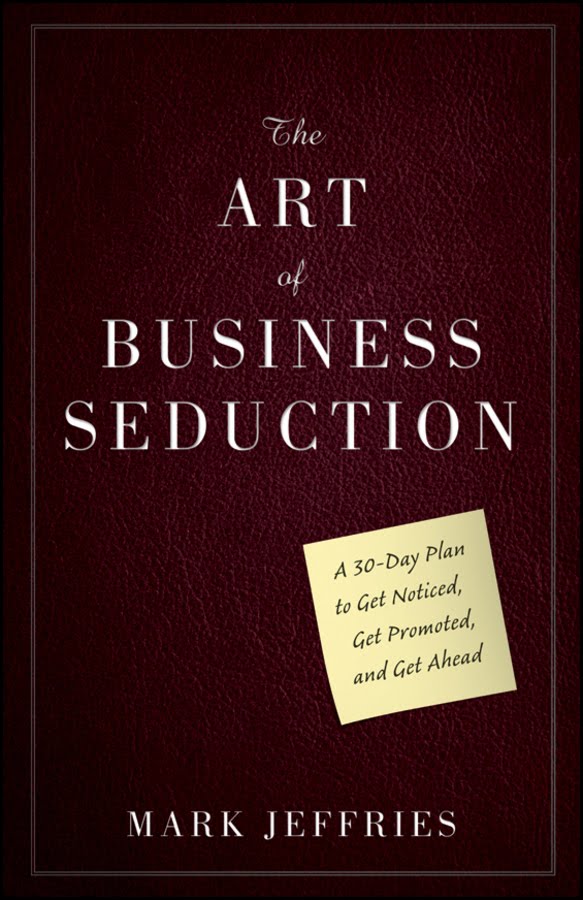
The one pictured at right sounds the most intriguing to me, but that may just be me judging a book by its cover...

By The Associated Press

TITLE: The Art of Business Seduction: A 30-Day Plan to Get Noticed, Get Promoted and Get Ahead

AUTHOR: Mark Jeffries

PRICE: $22.95

SUMMARY: Seduction is a powerful art form, even in the workplace. In “The Art of Business Seduction,” author Mark Jeffries teaches readers how to get ahead by using strategies similar to those employed in the dating world. In another new release a popular financial blogger describes how he conquered daunting debt to achieve financial success.With nearly 15 million Americans out of work and unemployment at 9.5 percent, job seekers must stand out these days. Jeffries, a business coach and communications consultant to major corporations, shares tips on how to get an edge whether it’s landing a job or a promotion. As the title suggests, Jeffries emphasizes many of the same skills that can also help attract a mate. For example, there are tips on honing your “elevator pitch,” the business world’s equivalent of a pickup line in a bar. Other advice focuses on how to own your image, speak persuasively, and translate subtle cues from others’ voices, body language and handshakes.The book pitches a personal program to make behavioral changes over 30 consecutive days, and ensure they become ingrained. One obvious target audience: Out-of-work professionals who possess great credentials on paper, but lack the personal polish needed to get a foot in the door.
QUOTE: “They say that a healthy diet — one that keeps the weight off — is a lifelong commitment, a revolution in the way that you select and eat food. Business seduction is the same. You cannot seduce for a month and then return to your old ways and hope for the success to continue.”
PUBLISHER: Wiley
— Mark Jewell


TITLE: The Simple Dollar: How One Man Wiped Out His Debts and Achieved the Life of His Dreams

AUTHOR: Trent Hamm

PRICE: $19.99 (paperback)

E-BOOK: Available for Kindle, Nook and Sony Reader

SUMMARY: Trent Hamm, who writes a popular personal finance blog with the same name, tells the story of how he got out his from under massive debt and learned to live a frugal life in this engaging book.Hamm shares the principles he’s developed over the last four years. And advocates what some will see as radical strategies. This ranges from selling every item you rarely use to making your own laundry detergent, if that’s what it takes to pay off your credit cards and other debt.Hamm also challenges readers to ask themselves hard questions about what’s really important. He maintains that everyone must be prepared for the unexpected — good and bad — and the only way to take advantage of positive opportunities or handle problems is to be financially independent.While there are few prescriptions that won’t be found elsewhere, Hamm has an engaging writing style and sprinkles his personal experience throughout the book. That makes it an easy read and a potentially helpful motivator for the financially distressed.

QUOTE: “I always find that people equate frugality with some form of misery — they either see it as being cheap or see it putting themselves through misery. I argue that it’s neither — that instead it’s joyful and life-affirming.”
— Eileen AJ Connelly

TITLE: Credit 911: Secrets and Strategies to Saving Your Financial Life

AUTHOR: Rodney Anderson

PRICE: $24.95

SUMMARY: “Credit 911: Secrets and Strategies to Saving Your Financial Life” offers a mortgage lender’s perspective on lending industry practices that too often become debt traps for individuals. Anderson, a mortgage lender, has seen customers trash their once-stellar credit scores by taking bad advice from bankers. He’s seen compulsive spenders buy 20 pairs of shoes a day online. The common denominator is that while it’s usually easy to get credit, it’s also easy to end up deep in debt.Anderson offers an inside look at the operations of banks, credit card companies and mortgage lenders. He also examines how predatory practices can trip you up. It’s a practical book with clear examples on avoiding credit trouble; and how to maintain good credit and repair poor credit.
QUOTE: “From my vantage point, I see a growing crisis in our country, and it gets worse every time we turn on our computers and connect to the Internet. As good as the marketers and credit card companies are at influencing your spending habits, they probably couldn’t have done such a thorough job of transforming the American consumer into a spending machine without the emergence of online shopping.”
PUBLISHER: John Wiley & Sons Inc.
— Eileen AJ Connelly

TITLE: Clutch: Why Some People Excel Under Pressure and Others Don’t

AUTHOR: Paul Sullivan

PRICE: $25.95 (Release date: Sept. 2nd)

E-BOOK: Will be available for Kindle, Nook

SUMMARY: The book “Clutch: Why Some People Excel Under Pressure and Others Don’t” explores the traits that enable some of us to thrive in win-or-lose situations. It’s useful reading for those who often seem to crumble under pressure.We’d all like to be the “clutch” player, the go-to guy or gal who can get things done under pressure. But it’s not in the cards for all of us, or maybe it is. In the forthcoming “Clutch,” Paul Sullivan, a columnist for The New York Times, examines strategies essential for remaining composed when the pressure’s on. Sure, there are plenty of sports references. But Sullivan uses those to illustrate larger points, such as the perils of overthinking. Anyone who feels that they tend to lose their confidence when the stakes are high can glean something from this analysis. For many that might mean prepping for that all-important job interview.

QUOTE: “The trouble is, when financial pressure mounts, most people do not and cannot think dispassionately until it is too late. They choke. They wait too long, thinking their situation will improve, and when it doesn’t, they have burned through their reserve funds and are still going to lose what they were struggling to keep.”

PUBLISHER: Portfolio
— Trevor Delaney

TITLE: The Little Book of Commodity Investing
AUTHOR: John Stephenson
PRICE: $19.95
SUMMARY: In the world of investing, a discussion of commodities can be about as dry as it gets. Though they’re items that we’re familiar with — like oil, wheat, and gold — learning about futures contracts can be off-putting to an average investor. But in this volume of “The Little Book Big Profits” series, Stephenson, a portfolio manager with First Asset Investment Management, makes the discussion both informative and accessible. With gold and other commodity prices surging this year, this book can be a useful starting point for investors eager to learn more.
QUOTE: “If you want to swill vodka and eat caviar like a Russian oligarch, nothing will get you there faster than a well-timed investment in industrial metals. Whenever cars, washing machines, and fridges are selling like hotcakes you can be certain that metals and the mining companies that produce them will be moving higher.”
PUBLISHER: John Wiley & Sons
— Trevor Delaney

Friday, June 25, 2010

Some excuses, and 3 new mini book reviews by the Associated Press

With my lack of reviews of personal finance books of late, you would think I seldom read a business book anymore ... and you would be right. But I did stay up til 4 a.m. today finishing Stieg Larsson's fiction thriller/bestseller The Girl with the Dragon Tattoo ... I reaaaalllly wanted to know what happened.

What can I say - reading fiction for me is pure escapism.

But I do have a few biz books stacked on my desk in the "to read" area. The latest to land in my mailbox are "Success Made Simple: An Inside Look at Why Amish Businesses Thrive," by Erik Wesner and "Zilch: The Power of Zero in Business," by Nancy Lublin, CEO of Do Something and founder of Dress for Success. So, stay tuned.

But until then, you may see a blog about Larsson's book ... and some more picks from my friends at AP.
Here are three now:
By The Associated Press

Saving a 401(k) from lackluster performance or, even worse, from sliding backward is the focus of a new title by business owner and executive David Rye. Most retirement savers can glean something from this book, which covers the basics for a novice but also explores various funds and strategies for more experienced investors.

Another new title, "How an Economy Grows and Why it Crashes" offers a light look at some heavy issues. Through cartoon drawings and simple language, it explores demand, consumption, productivity and other economic issues.

TITLE: Save My 401(k)! What You Can Do Now to Rebuild Your Retirement Future

AUTHOR: David Rye

PRICE: $14.95 (paperback). Also available electronically for Kindle.

SUMMARY: In just over 200 pages business owner and executive David Rye walks through the basics of the 401(k). He lays out simple steps for choosing the right investment options and tips on diversifying.
Rye, in later chapters, delves deeper into investing in various funds and how they can help a worker meet retirement goals. Stock and bond funds are covered along with index funds, target-date funds and exchange traded funds. He also devotes a section of the book to managing money in retirement with useful discussions on when it's best to begin drawing Social Security, signing up for Medicare and dealing with inflation.

He offers useful detail on rolling over a 401(k) into individual retirement accounts and when it's an appropriate move.

QUOTE: "For starters, you've got to play an active role in managing your 401(k) plan because if you do nothing but watch from the sidelines, you will lose even more. Although taking on that responsibility may seem like a daunting task, it doesn't have to be."

PUBLISHER: The McGraw-Hill Companies Inc.
—David Pitt

TITLE: How an Economy Grows and Why it Crashes

AUTHOR: Peter D. Schiff and Andrew Schiff

PRICE: $19.95 Also available electronically for Kindle, e mobi and Nook.
SUMMARY: Expanding on a story their father, Irwin Schiff, first told them during a car trip to explain how economics works, brothers Peter and Andrew Schiff take readers to a desert island inhabited by three men who fish with their hands. When one of them hits upon the idea to make a net, the number of fish they can catch expands, and island's economy starts to grow. Eventually, the growth leads to complicated transactions, the "Fish Reserve Bank" makes questionable decisions, and a "hut glut" created with easy credit collapses, taking the island's economy with it.

In simple language illustrated with cartoon drawings, readers learn through these three men and their descendants about concepts from demand, consumption and productivity to the creation of banking and a service sector. With a "reality check" at the end of each chapter, they note how the simple story can be translated into what happens in the larger world.

The authors use the book to challenge mainstream economic viewpoints like support for government spending to stimulate the economy. The characters are modeled, and named, after real-life figures, like Ally Greenfin, Ben Barnacle and Senator Cliff Cod, but a level of humor throughout keeps the reading light when the concepts get heavy.

QUOTE: "Despite the fact that many islanders were upset for overpaying for their huts, the island economy would have actually been better off if hut prices came down and building ceased altogether, at least until real demand returns. That way people could spend less on huts and have more to spend on the things the economy lacked — like new businesses and carts that could be pulled by just one donkey. Resources used for new hut construction, like bamboo and rope, could be used for new businesses instead. Unfortunately, government interventions would prevent this natural reallocation of resources from occurring."

PUBLISHER: John Wiley & Sons Inc.

—Eileen AJ Connelly

TITLE: The Mindful Investor: How a Calm Mind Can Bring You Inner Peace and Financial Security

AUTHORS: Maria Gonzalez and Graham Byron
PRICE: $24.95. Also available electronically for Kindle.

SUMMARY: Mindfulness is the ability to be aware of where and what you are without being disturbed by outside influences. Maria Gonzalez, founder and president of Argonauta Strategic Alliances Consulting Inc. and Graham Byron, an investment adviser and certified financial planner, pose that mindfulness helps individuals achieve a healthy relationship with money and their financial goals.

The book's first few chapters explain mindfulness, offer techniques to achieve it and outline the five obstacles that impede success including attachment; aversion; ignorance, confusion and delusion; envy and jealousy; and pride. The book's middle chapters guide readers to identify their goals and determine if they are on track to achieve those goals. The remaining chapters focus on portfolio management, client/adviser relations, estate planning and what to do when things go wrong all in the context of mindfulness.

QUOTE: "In reality, most people have enough money, even after the recent market collapse. What they don't have is the level of calm, clarity, focus, and equanimity required to live peacefully with money. Mindfulness can help achieve it."
PUBLISHER: John Wiley & Sons Inc.

— J.W. Elphinstone

Friday, June 11, 2010

AP review: Broke, USA: From Pawnshops to Poverty, Inc. — How the Working Poor Became Big Business

Though the number of pawn shops and check cashing joints on High Street in Pottstown is fewer than it was a decade ago, when I moved to town, there still are plenty to go around. There are also quite a few furniture and appliance rental stores in the area.

According to Gary Rivlin, the author of the new book "Broke, USA: From Pawnshops to Poverty, Inc. - How the Working Poor Became Big Business," these types of businesses sprang up in poor areas to exploit the poor working class.

Below is an Associated Press review of that book:

Book studies how 'Poverty, Inc.' wrecked economy

By DAN SCHERAGA
Associated Press Writer

"Broke, USA: From Pawnshops to Poverty, Inc. — How the Working Poor Became Big Business" (Harper Collins, 368 pages, $26.99), by Gary Rivlin:
To the upper and middle classes, they're all but invisible, but to the working poor, they're a fact of life: pawnshops, payday lenders, storefronts offering high-rate mortgages, tax preparers promising instant cash refunds. They sprouted throughout America's poorest communities over the past two decades, eventually saturating the slums and expanding outward into the suburbs. By late 2008 when they were at the core of a nationwide economic collapse, they were too big to ignore.

In "Broke, USA: From Pawnshops to Poverty, Inc. — How the Working Poor Became Big Business," business journalist Gary Rivlin unravels the events that led to the crisis, explaining how the dark corner of the financial services sector he calls "the poverty industry" was allowed to rage out of control with the backing of Wall Street and the inaction of Washington and state governments, despite the warnings of consumer advocates.

The size of "Poverty, Inc." is not insignificant. According to Rivlin, consumers spent $11 billion on payday loans and check cashing fees in 2008 — as much as they spent on movie tickets that year. They spent an additional $7 billion on rent-to-own stores, which attract cash-strapped customers with low entry fees, but over time sell home furnishings and electronics at markups far higher than any conventional retailer.

Rivlin appears to hold particular contempt for the subprime lenders who cater to clientele with tarnished credit. He describes a Wild West mentality that led these lenders to usher their customers into mortgages they couldn't possibly afford, hit them with huge hidden fees and pressure them into multiple refinancings that put them deeper into debt. The pattern often continued until customers owed more than their homes were worth, sometimes resulting in entire once-vibrant working-class neighborhoods being reduced to urban wastelands of foreclosed and abandoned homes.

Rivlin's look at the rise and fall of subprime lenders and the rest of "Poverty, Inc." is painstakingly researched, involving both industry leaders and their opponents. "Broke, USA" is vital reading for those seeking to deepen their understanding of the economic crash of the past few years.

Friday, April 23, 2010

Six new books homeowners might want to turn to for ideas

The Associated Press has come up with mini reviews of SIX new books on topics homeowners are going to find interesting and noteworthy.

Working on title alone, and as a former design consultant for my stepdad’s furniture store, I’m going to have to go with "The Big-Ass Book of Home Decor." Going by sheer necessity, and the state of my crabgrass-mottled lawn and unplanted, weed-straddled vegetable garden, I should probably check out "The Garden Primer" ASAP.
 
Homeownership: Books on how to buy, improve, green

By The Associated Press

A home is one of the biggest investments you'll make, so it's natural that you want to read up on how to get the most for your money.
To mark home buying season, we look at some titles that help do just that. The books include guides on buying your first home, rating green home projects and sprucing up your living space.
Here's a look at some titles for current and prospective homeowners:

TITLE: Nolo's Essential Guide to Buying Your First Home (2nd Edition)
AUTHOR: Ilona Bray, Alayna Schroeder, Marcia Stewart
PRICE: $24.99 (paperback)
SUMMARY: The authors open by making the case for why you should invest in your own home. They then review the tax benefits and walk readers through the necessary first steps to assess their finances. The 380-page book then moves on to the nitty gritty of finding the right mortgage provider and real estate agent — even, including forms to help interview candidates and a CD-ROM of additional materials. Readers will find a range of very practical tips. For example, how to dress and present yourself as you search ("A lot of bling or overdress means the seller or agent will think you can afford full price"). There are also ideas for how to keep your housing search organized.
QUOTE: "Check out your finances with a professional even before you think you're ready to buy. Most people who don't own a home don't think they can. They think they won't qualify."
PUBLISHER: Nolo
— David Pitt
TITLE: Home Improvement 1-2-3
AUTHOR: The Home Depot
PRICE: $34.95
SUMMARY: If you've got basic do-it-yourself ability and a desire to do more, Home Depot's illustrated 607-page book should be useful and covers just about every topic you might be interested in, from accent lighting to wood rot. This encyclopedic book is broken down into sections that provide detailed coverage of the more common projects and techniques, such as doors and windows; cabinets, countertops and storage; plumbing, and electrical. The authors rate the skill level of each project on a scale of five; replacing cabinet hardware gets a 1, adding a closet a 5. Completion time is estimated at three levels — experienced, handy and novice. And the materials and tools needed are provided at the beginning of every project.
QUOTE: "There's no magic in home improvement: just a willingness to give it a try; a desire to learn how things work so you can fix them; and, finally, taking pride in what you can accomplish with a little elbow grease and good advice."
PUBLISHER: Meredith Books
— Dave Carpenter

TITLE: Green Sense For the Home: Rating the Real Payoff from 50 Green Home Projects
AUTHOR: Eric Corey Freed and Kevin Daum
PRICE: $21.95 (paperback)
SUMMARY: The authors take a sort of "good cop, bad cop" approach as they examine everything from helping your toilet use less water, to installing a green roof. Freed is the real green believer, and tells readers why green projects are good ideas, and walks them through how to complete them properly. Daum represents the bottom-line watchdog, making sure readers understand how much money a project will cost and how much they can expect to save. The book divides green projects into three groups: Those that can be done right away, those that need a bit more prep work, and more complex tasks like building a green house from the ground up.
QUOTE: "Together, we want to empower you to make green choices based on the affordability of the projects and the potential cost savings, with full knowledge of the ethical and financial benefits of each."
PUBLISHER: The Taunton Press
— Alex Veiga


TITLE: Homebuyers Beware: Who's Ripping You Off Now?
AUTHOR: Carolyn Warren
PRICE: $19.99 (paperback)
SUMMARY: It's scary out there. The subprime mortgage crisis exposed the dangers of predatory lending and led banks to raise their credit standards. Although the basic process is the same, homebuyers face tighter credit standards that bring a new set of questions. There are plenty of opportunities for missteps when shopping for a home, so it's easy to be taken advantage of. "Homebuyers Beware" points out potential red flags in a clear and easily accessible way. For instance, one section discusses questionable fees buyers might find among their closing costs.
QUOTE: "Don't call the agent on the sign! If you call the seller's agent, the one listed on the For Sale sign, it's like calling your opponent's attorney. You could easily give out information about yourself, your financing, your price range, and so on that the seller's agent shouldn't know."
PUBLISHER: FT Press
— Trevor Delaney


TITLE: The Big-Ass Book of Home Decor
AUTHOR: Mark Montano
PRICE: $22.50 (paperback)
SUMMARY: Reflecting its casual title, this book offers simple art-and-crafts projects that can freshen up a living space. It's likely best for a college student or someone who wants to give their place some personality without spending a lot. Filled with colorful photographs and playful fonts on thick, glossy pages, it resembles a cross between a coffee table and recipe book. Most of the 105 projects are listed on a single page, with a list of what "You'll Need" and a handful of steps describing "Here's How." If you recognize the author pictured at the start of the book, it's because he's appeared on TV as host of TLC's "While You Were Out" and Style Network's "My Celebrity Home."
QUOTE: "Perfection is overrated! That's my motto. I don't want to be perfect and I don't expect anything I make or do to be perfect. I think that would be a tragic bore."
PUBLISHER: Stewart, Tabori & Chang
— Candice Choi


TITLE: The Garden Primer
AUTHOR: Barbara Damrosch
PRICE: $18.95 (paperback)
SUMMARY: "The Garden Primer" is a gardening classic because of its simple format, easy to understand text and comprehensive content. Part how-to, part plant encyclopedia, Barbara Damrosch leads novice and expert gardeners alike from landscape planning to soil preparation to harvest. There's even an entire chapter on lawns.
Damrosch stresses the importance of knowing the space and climate you're working in. With that knowledge you should make your decisions about how and what to plant. Her most helpful passages are those that involve taking care of various plants. She offers detailed descriptions of how much water they need, how to feed them, the likely pests and diseases they face.
QUOTE: "Once you understand what makes plants tick, you'll know what to do to help them grow well."
PUBLISHER: Workman Books
— Eileen AJ Connelly

Thursday, July 16, 2009

A long wait for my BFF

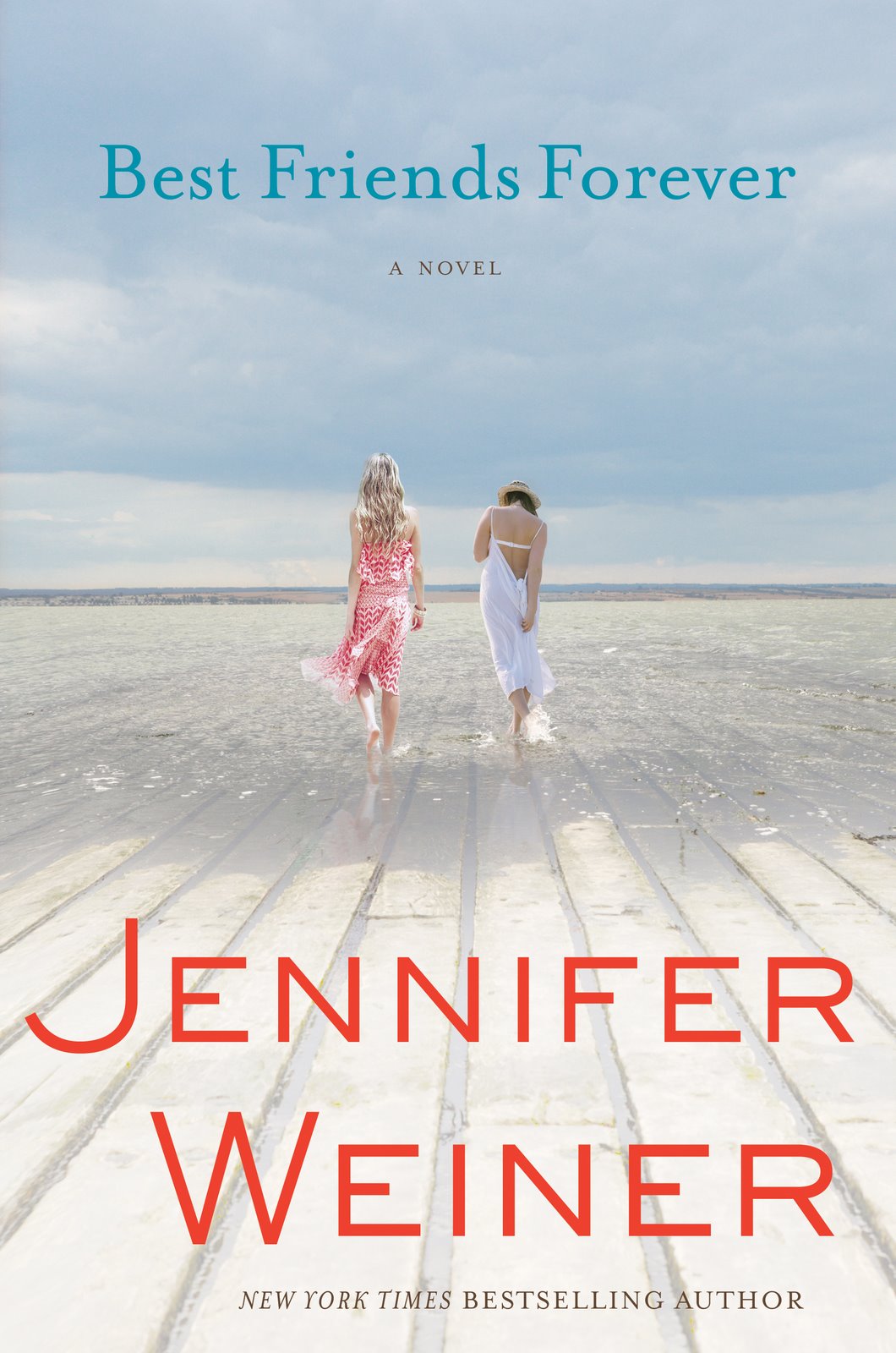
I just became the 124th Montgomery County resident to request Jennifer Weiner's latest novel, "Best Friends Forever," from the library system.
I'm a fan of Weiner's work, and am fascinated by the fact that she got her start at my hometown paper, The Centre Daily Times, then worked for the Philadelphia Inquirer and is now a wildly successful novelist. Pie in the sky? Perhaps not.

So I tried to persuade Simon and Shuster to mail me a free "review" copy of the book, which is just out this month. No dice. No. 124 it is.

Below is the Associated Press review of the book (the reporter didn't like it so much).

It might be some time before I can write my own...

'Best Friends Forever' - not Weiner's best book

By ALICIA RANCILIO
Associated Press Writer

"Best Friends Forever" (Simon & Schuster, 368 pages, $26.99), by Jennifer Weiner: Addie Downs and Valerie Adler became BFFs when they were both 9. Then something happened. And, as it goes with so many best friends, it was TTYN — talk to you never.

Jennifer Weiner introduces us to the lonely, single Addie in her newest exploration of women, friendship, relationships and the random emotions of life in "Best Friends Forever."
Addie, who lives in her parents' house and takes care of her damaged brother, searches for love on the Internet. Then, she gets an unexpected late night visit from her former childhood friend, Valerie, who needs Addie's help because Valerie may have seriously injured a former school classmate at their high school reunion. Unlike Addie, Valerie has built a successful career as a TV weather reporter.

Addie's parents have both died and her brother has a brain injury. She was very overweight until recently. (Weight, a problem that has challenged the author, is a recurring theme in Weiner's books from her very first, "Good in Bed.") Addie was made fun of so much as a child that she's isolated herself as an adult.

Weiner knows how to create characters that make you care about them. She mastered this from the get-go with "Good in Bed." There, lead character, Cannie Shapiro, was so likable she made a cameo in Weiner's second book as a wink to readers. And last year, Weiner published a sequel to Cannie's story called, "Certain Girls."
Addie Downs is similar to Cannie Shapiro in that she's got self-esteem issues and you want her to be OK. Valerie Adler is just the opposite: She's self-absorbed, flighty and where she's intended to be quirky she's annoying.

Once back in Addie's life, the two women leave town to figure out what happened. They again elevate each other to best friend status in a way that feels superficial, insincere and silly. Meanwhile, a detective investigating the case pieces together details about Addie's life and finds himself falling for her.

The book leaves you feeling as though Weiner thought her first draft was too long so she highlighted random chunks of detail and hit the delete button. There are conclusions that seem unnatural and poorly developed secondary characters, such as police officers investigating the case who seem unnecessary.

While Weiner's writing has heart, it falls flat and doesn't measure up to her previous works. She can do better. Much better.
Sadly, the plot doesn't pull you in the way "Good in Bed" and "In Her Shoes" do, and one endearing character can't save the story.