Wednesday, December 31, 2008

Living within your means: Always a 'classic'


On the heels of a week's vacation to Colorado, my blog's getting cobwebs. Thanks to the Associated Press for bailing me out this once...

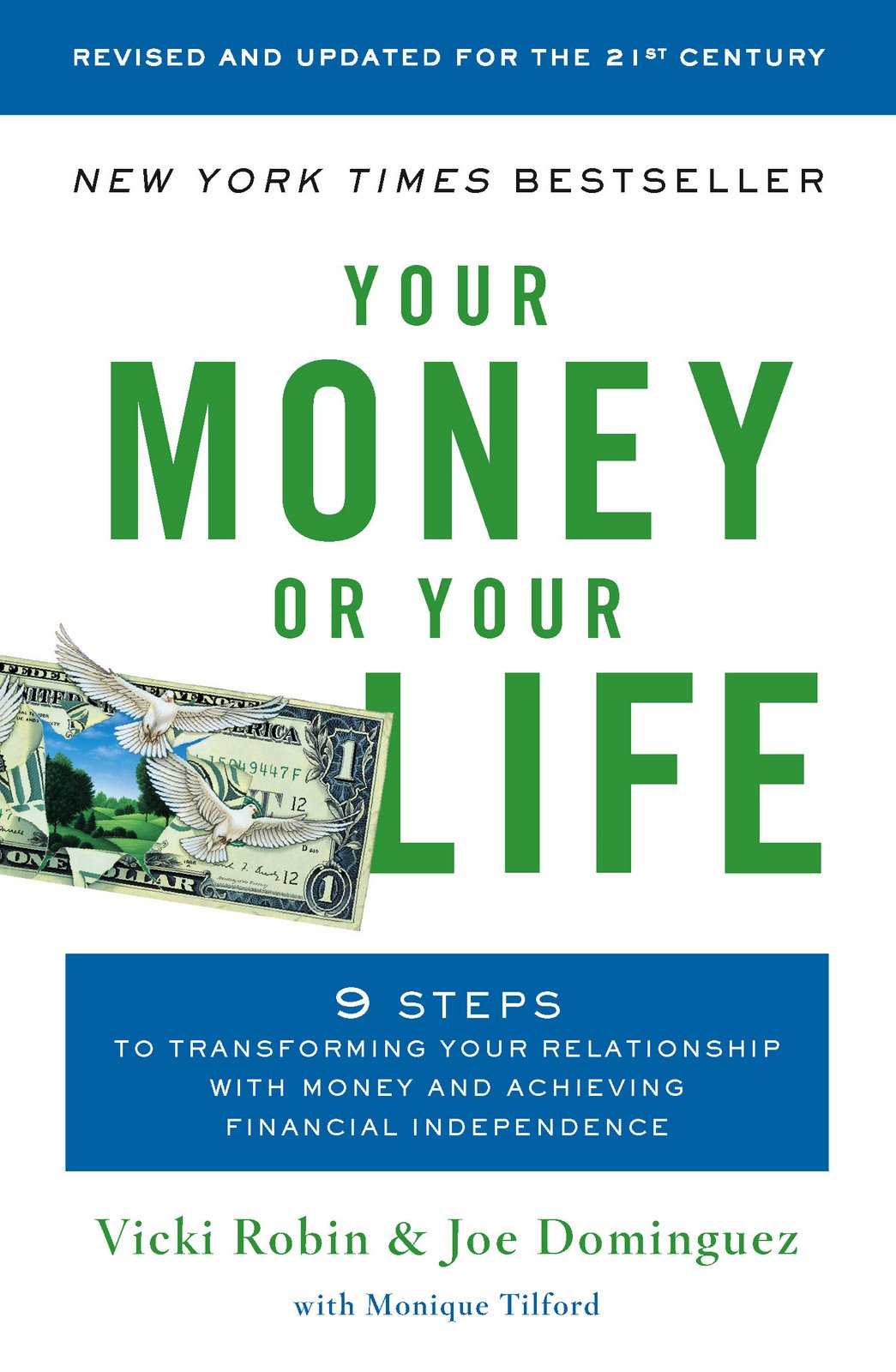
Revisiting a Classic: 'Your Money or Your Life'
By EILEEN AJ CONNELLY
AP Personal Finance Writer

NEW YORK (AP) — There are countless personal finance books that advise readers on budgeting, investing and paying down debt. Few leave the tips aside and ask you to question your relationship with money and the reasons you spend what you do.

"Your Money or Your Life," urges readers to re-examine everything about their financial lives through a less materialistic lens. Originally printed in 1992, the classic title has been updated and reissued at a time when the frugality it advocates might look much more appealing.

The book encourages readers to shed the viewpoint that more is always better, and offers nine steps that have the potential to help drastically reduce expenses and reshape the role that money plays in your life. Some of the steps are time consuming, like determining how much you've earned during your lifetime and producing an inventory of everything you own. And some, like determining your "real hourly wage" — by factoring in how much time and money you put into your job when you're not at work — can be eye-opening.

The Associated Press talked with co-author Vicki Robin about the philosophy behind "Your Money or Your Life," and what it has to offer in today's economy.

Q. Do you think the book's emphasis on living within your means has a new relevance in the current economic climate?

A. People have leveraged themselves to the hilt and are in shock that the system has let them down. I think the book provides a very helpful framework for people to take stock, and begin to track the flow of money and stuff in their lives, so they can get a clear picture of their relationship with money.

I don't mean to imply that people have been drunk, but in a way, debt has been sort of a binge. In the old days, we could binge all the way until we were out of money. With the advent of credit cards, we could binge with nobody watching. But what do you do when you wake up on Jan. 2 and realize you made a fool of yourself? You have to forgive yourself, take stock of where you are. You need to make some amends, and make some resolutions. I would really love it if people chose this moment to ask themselves where they are and where they want to go.

Q. You state that the nine steps outlined in the book can help reduce expenses an average 20 to 25 percent. How is that possible?

A. It is an enormous number, and I'm not saying that's the goal, I'm saying that's the result of paying attention. The book is about awareness, very precise awareness of what's going on.

The key to that reduction, is that when people determine their real hourly wage, on average they find that 20 to 25 percent of their nominal wage is their real hourly wage. Once people start paying attention to that, they start to look at the small, unconscious daily luxuries, and the bigger things. Every aspect of one's expenses comes into the "Is it worth it?" scrutiny, not necessarily the belt-tightening scrutiny.

Q. Is it really possible to convince people to step back from the consumer-driven idea that "more is better"?

A. The concept of "more is better" has been constructed by the industrial growth economy and aided and abetted by the advertising industry. Up until we were educated into more is better, we were naturally frugal because we understood that there's only a limited amount of stuff, and there's only a limited amount of needs.

I think this has been educated into us and I think we can easily educate it out of us. But politically and socially, it's going to be a tough row to hoe.

Q. Another concept you challenge is the idea that people define themselves by their jobs. What's wrong with identifying yourself through your work?

A. We're trying to break the stranglehold of identification with only compensated work. I think it dishonors the many other things that people do that are not compensated for financially.

There's many roles that we assume in life: sister, brother, mother, father, daughter, son, worker, community member, friend, volunteer. So we're just suggesting to not say I am a (profession) in such a way that it devalues the rest of your life. If you start valuing everything in your life, then you start realizing that your work is not everything. So you can make sure that you have enough hours of the day for other things that are important to you.

Q. Your book has been criticized as presenting a New Age, "hippie" or "tree-hugger" philosophy that many might find hard to embrace. Are you concerned that could limit its reach?

A. Christians have said it's a Christian approach to money. Buddhists have said it's a Buddhist approach. Frugal people have said it's an approach to frugality. I don't think it's New Agey per se, I think it's pragmatic.

Q. You don't give a lot of specific financial advice in the book. Does it contain anything for people who don't follow all nine steps?

A. Most people don't follow the whole program. But people frequently say it changed their life. One woman said she didn't realize until she did an inventory of her closet that she had many, many white blouses. She realized that every Friday after work, she'd go to the store and she'd buy herself a pretty blouse, because she "deserved it." If it's only that, if you read the book and wake up to a shopping habit, it's enough. Even if you stick a toe in the water, some realization happens. What we're simply trying to add to the conversation is that your own awareness of what makes you happy and what you spend your money on is important.

Thursday, December 18, 2008

"My Sister, My Love": decidedly not a fairy tale


Joyce Carol Oates, author of 37 novels, gets some material for her fictional accounts from the dark and twisted true tales of real life. And "My Sister, My Love," (2008, HarperCollins, 562 pp.) is no exception. (Before I go any further: This review contains spoilers!!)

The lengthy tale, told from the point of view often memory-impaired recovering drug-addict 19-year-old Skyler Rampike, and sometimes from his aching 9-year-old self, is based (not loosely at all) on some of the facts surrounding the murder of Boulder, Colo. child beauty pageant star JonBenet Ramsey (aka Bliss Rampike in this work).

JonBenet's murder in the basement of her family home around Christmas, 1996 was highly publicized. I'm sure you all remember it well. Her parents, the well-to-do John and Patsy Ramsey, were subsequently scrutinized by the "tabloid hell" of journalism.

JonBenet at the time of her brutal murder at 6 - but even as young as 4 - was a highly stylized, even sexualized, child star. Photos of her in myriad costumes and poses, like a little make-believe doll all, are all over the Internet, even 12 years later. I believe it was finally determined, through advances in forensic DNA processing, that it was indeed an outsider who broke into the Ramsey home and killed the innocent child.

However, her brother, Burke, who was 9 at the time of the murder, was looked at as a suspect for some time. So were his parents. Mother Patsy Ramsey died of cancer a few years back. (also echoed in this novel, but with a modern twist). Today, Burke has presumably gone on with his life. According to my Google results, Burke's now 22, living in Atlanta, with his dad.

But what was the boy's life like in the intervening years - the years between his sister's death and his becoming an adult? How did this family trauma and national attention affect him?

We can only speculate that it was beyond horrible.

Oates' interpretation shows the nice, obedient "Mummy's" boy (Skyler Rampike) reduced to rubble, mentally and physically. His parents, who had used their children as tools to climb the social ladder, cast him away after his sister's murder to whatever psychiatric hospital, drug rehab or private school for the troubled rich would take him). But not before his mother, Betsey, had planted the seed in his mind that HE had killed his sister. His father, the larger-than-life corporate figurehead Bix, never really giving him the time of day after it was determined the boy would not be a star athlete like his Big-Daddy. (Bix's aggressive parenting results in Skyler incurring an injury that will plague him lifelong for every step he takes).

So, through the novel, we sympathize with but also doubt and pity poor Skyler. We concede that it's possible he killed his beloved sister, who after all received more attention from the folks because of her skating prowess. He was jealous, we think.

But we are also introduced to the cold, one-dimensional parents who did little to help the troubled child after his sister was gone other than foot the doctors' bills. We wish Skyler could escape that life and find some peace. And in the end, we are left with a tiny bit of hope for that - even as Skyler is left standing at a crossroads of sorts.

Written partly from a child's perspective, and containing misspellings, handwritten items, and on almost every page - extensive footnotes, "My Sister, My Love" is Skyler's tool of catharsis. And though it is a long book (I had to renew the 14-day book for a second two-week run from Pottstown Library, to my chagrin), the ending is revelatory. It's not exactly an enjoyable read, but it does keep your attention.

Friday, December 12, 2008

New book now wowing Rowling fans worldwide - except me


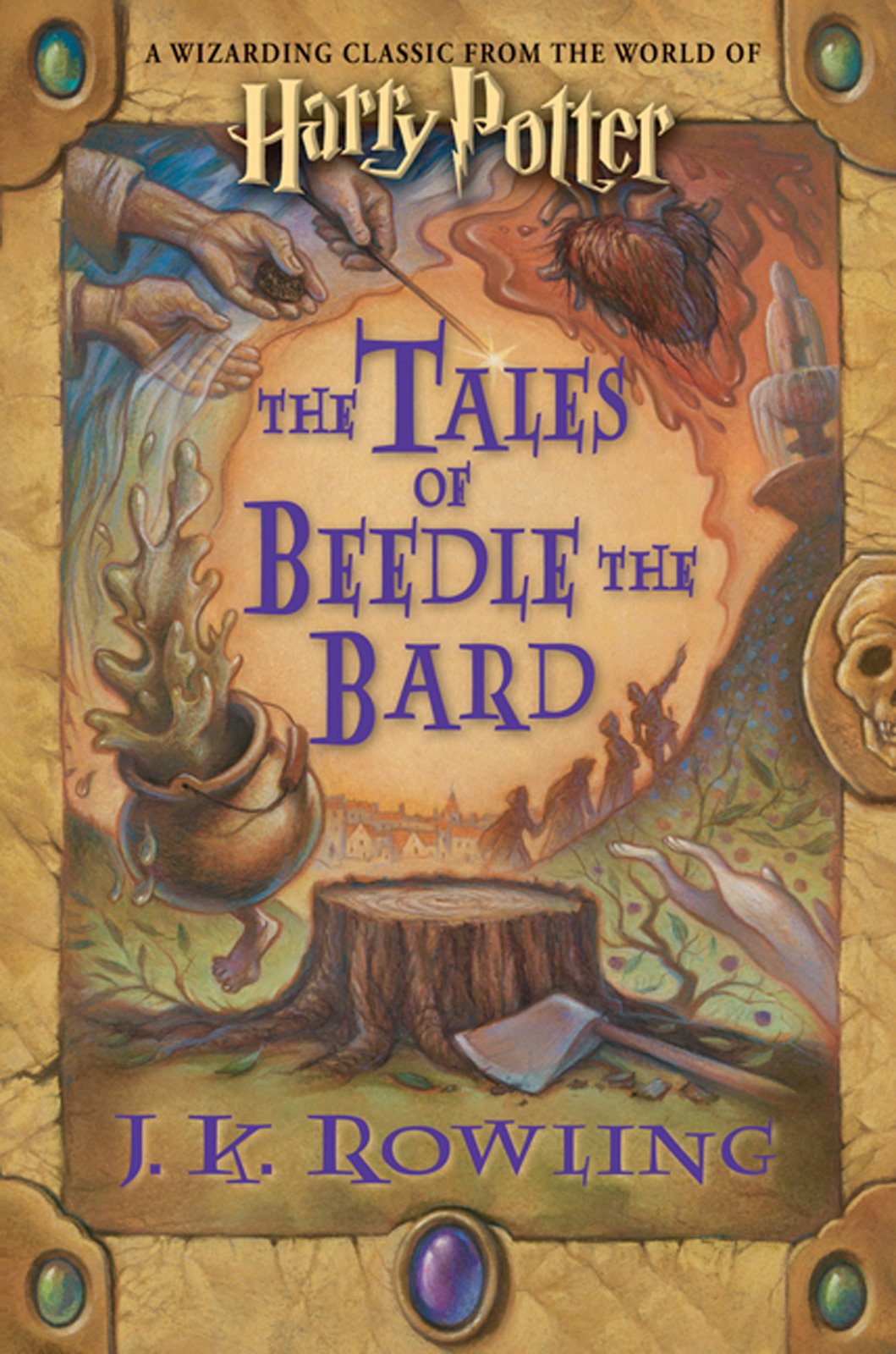
I'm pretty sure I'm the only person on the planet who never got swept away by the Harry Potter books. At the suggestion of Mercury Police Reporter Brandie Kessler, I read the first one. It was cute. I saw the movie. Also cute. But, and perhaps this shows my age, there are other ways I'd like to spend my time. I know Mercury Reporter Evan Brandt, author of The Thin Green Line blog, and his son Dylan read all the books together. That is adorable. Still, I don't need to read them. But for all of you Harry Potter fans out there, Rowling's latest, "The Tales of Beedle the Bard," is now flying off the shelves of a store near you. Just in time for the holidays.


New JK Rowling book goes on sale around the world
By Ben McConville
Associated Press Writer

EDINBURGH, Scotland — The latest magical tome by J.K. Rowling has started to fly off bookstore shelves.

Rowling launched "The Tales of Beedle the Bard" on Thursday with a tea party for 200 school children at the National Library of Scotland in Edinburgh, where she lives.

The author is donating royalties from the book to a charity, which hopes it will raise millions to help vulnerable children.

Recession-hit booksellers hope the book — a collection of five fables mentioned in Rowling's saga about boy wizard Harry Potter — will give them a festive boost

"We expect it to come straight in at No. 1 and is very likely to be our No. 1 book this Christmas," said Jon Howells of Britain's Waterstone's book store chain. "It's in with a fighting chance of being the best-selling book of the year, even though there are only a few weeks to go.

"This is J.K. Rowling. None of the usual rules apply," he said.

"Beedle the Bard" is being published Thursday in more than 20 countries, with a global print run of almost 8 million. But is generating only a fraction of the fanfare that greeted the Potter novels.

Rowling is donating her royalties to the Children's High Level Group, a charity she co-founded to support institutionalized children in Eastern Europe. The book is published on behalf of the charity by Harry Potter's traditional publishers — Scholastic in North America and Bloomsbury elsewhere.

Rowling, whose Harry Potter books have sold more than 400 million copies and been translated into 67 languages, wrote the Beedle tales after finishing "Deathly Hallows" last year.

One of the stories, "The Tale Of The Three Brothers," is recounted in "Deathly Hallows," in which the storybook helps Harry and his friends defeat evil Lord Voldemort.

Rowling has described "The Tales of Beedle the Bard" as a distillation of the themes found in the Harry Potter books, calling it her goodbye to a world she lived in for 17 years.

The book was initially produced last year in an edition of seven handwritten copies. Six were given away by Rowling as gifts, and one was bought by Internet retailer Amazon at an auction for almost 2 million pounds ($3 million).

Rowling told the schoolchildren at the launch that she published the book after complaints from readers over the sale.

"There was quite a lot of high feeling from Harry Potter fans that only someone who had 2 million pounds could afford to read the book," she said. "I thought: 'fair point,' so I thought I'll publish it and then the charity can have that money too."

Rowling read a passage from the tales to her young audience, which was given free copies of book.

Amazon is printing 100,000 copies of a leather-bound collectors' edition priced at 50 pounds, or $100 in the United States.